
Connecting Intelligence Across K-12 Nutrition: Our Partnerships with AskJen and Saavor
At Gaia, our mission is simple: give school nutrition teams the tools, data, and clarity they need to do their jobs well. Every feature we build and every partnership we form comes back to one question — does this make life easier for the people feeding students every day?
Our partnerships with AskJen and Saavor AI are a direct answer to that question.
Both companies are building technology specifically for K-12 foodservice. Their approaches are different, but the goal is the same as ours: use smarter systems and better data to cut through complexity and help school nutrition teams run more effectively.
AskJen: Smarter Answers, Faster
AskJen is a AI model built specifically for school food professionals. It pulls from USDA guidance, compliance materials, training resources, and equipment documentation — so whether a director needs a quick answer on a regulation or a cook needs help with a piece of equipment, AskJen has it covered, by chat or voice, on any device.
Here's how our partnership makes it even more powerful.
Phase One: Better Data Behind the Answers
AskJen will now draw from Gaia's product catalog — a living database integrated directly with manufacturers and enriched with child nutrition data. This means verified spec sheets, CN information, and nutritional details, all reviewed through a compliance lens.
For directors making decisions about substitutions, menu changes, or procurement, this matters. Instead of hunting for product information or relying on generalized guidance, they get accurate, manufacturer-backed data they can actually trust.
Phase Two: Intelligence That Knows Your District
The bigger vision is contextual intelligence — AI that doesn't just give general answers, but answers based on your district's actual data.
Each district will have its own Gaia and AskJen environment. These communicate only with each other, keeping district data completely private and secure.
What does that look like in practice? Imagine a director asking: "What can I produce tomorrow with what I have on hand?"
Gaia already tracks inventory, forecasts participation, and understands recipe requirements. AskJen understands compliance rules, USDA updates, and best practices. Together, the answer isn't generic — it's grounded in what's actually available in that kitchen, on that day.
That's the kind of decision support that saves time and builds confidence.
Saavor AI: Smarter Service at the Serving Line
While AskJen focuses on knowledge and compliance, Saavor AI focuses on what happens when students go through the lunch line.
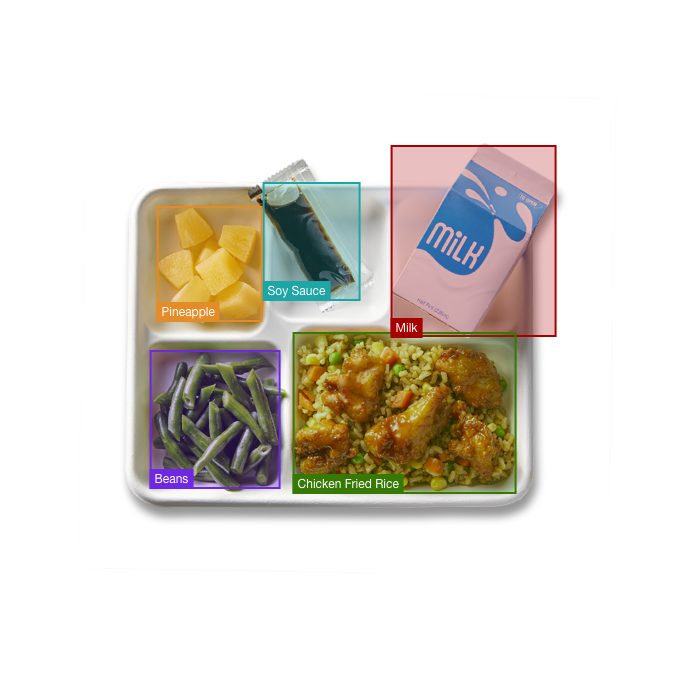
Saavor AI has developed a point-of-sale terminal that uses image recognition to identify meals and check reimbursability in real time. Instead of cashiers manually entering every tray, the system visually recognizes what's on the tray, confirms it meets requirements, and flags any issues before the transaction goes through.
This is a practical solution to a very real problem: staffing. With Saavor AI, one cashier can monitor multiple terminals because the system handles the validation. If a tray is missing a required component, staff are alerted immediately.
It also gives directors a new window into what's actually happening at the serving line — what students are selecting, what meals look like in practice, and where there might be gaps in participation or menu effectiveness.
Through this partnership, Saavor AI's front-of-house data flows directly into Gaia's back-of-house platform — connecting the serving line to inventory, forecasting, menu planning, and compliance in one operational picture.
Why We're Excited
School nutrition teams are dealing with staffing shortages, supply variability, cost pressure, and constant regulatory changes. The right technology doesn't solve all of that, but it can remove a lot of the friction.
That's what these partnerships are about.
AskJen brings regulatory knowledge and instant answers. Saavor AI brings automation and visibility at the point of service. Gaia ties it all together — product data, inventory, menus, procurement, and compliance in one place.
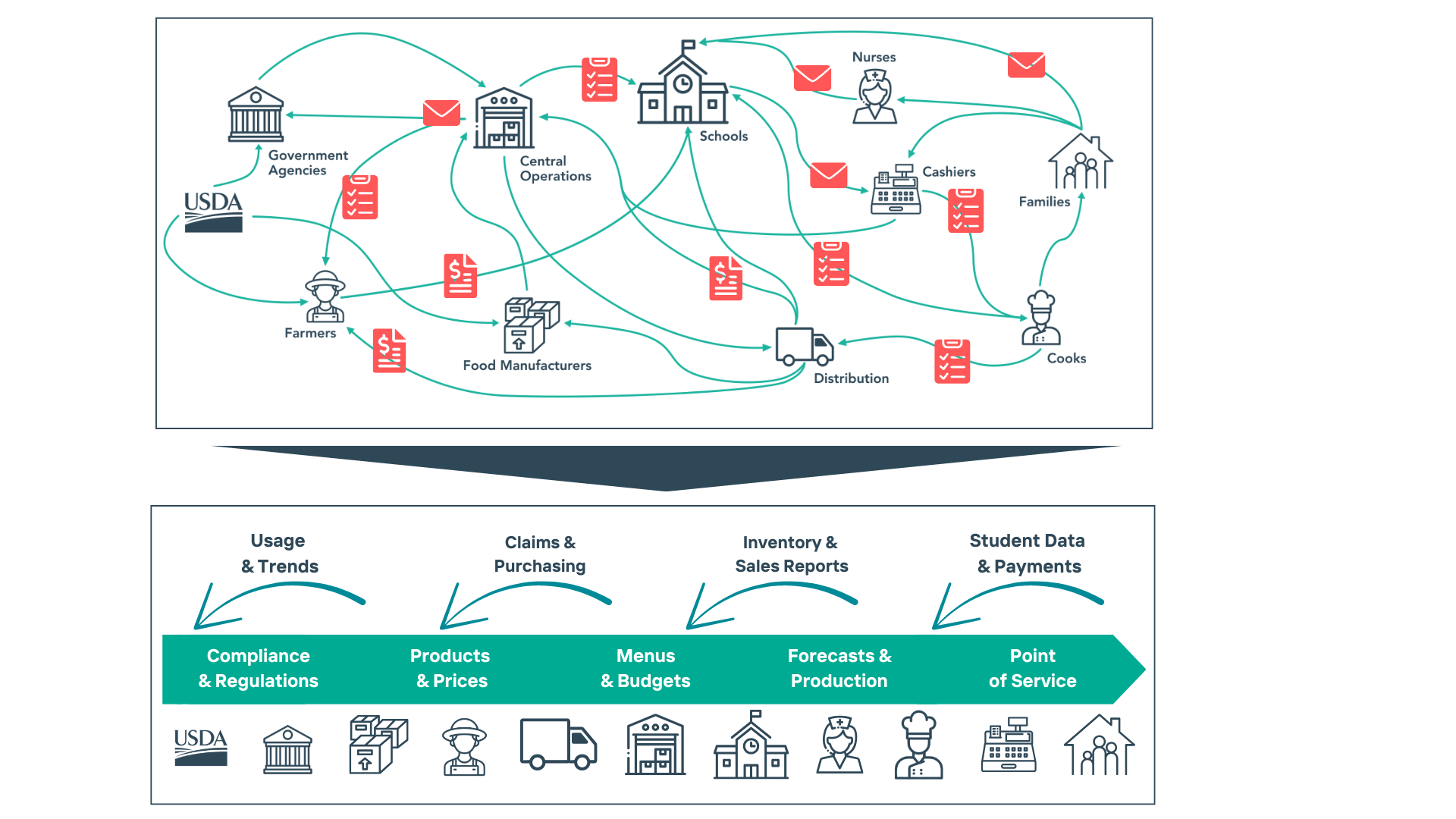
When these systems work together, AI stops being a generic tool and starts being genuinely useful — grounded in real data, real constraints, and the actual work of running a school nutrition program.
We believe that's the future of K-12 nutrition. And we're glad to be building it.
